



Mining argument structures, argumentation schemes and implicit premises from physicians' diagnostic explanations
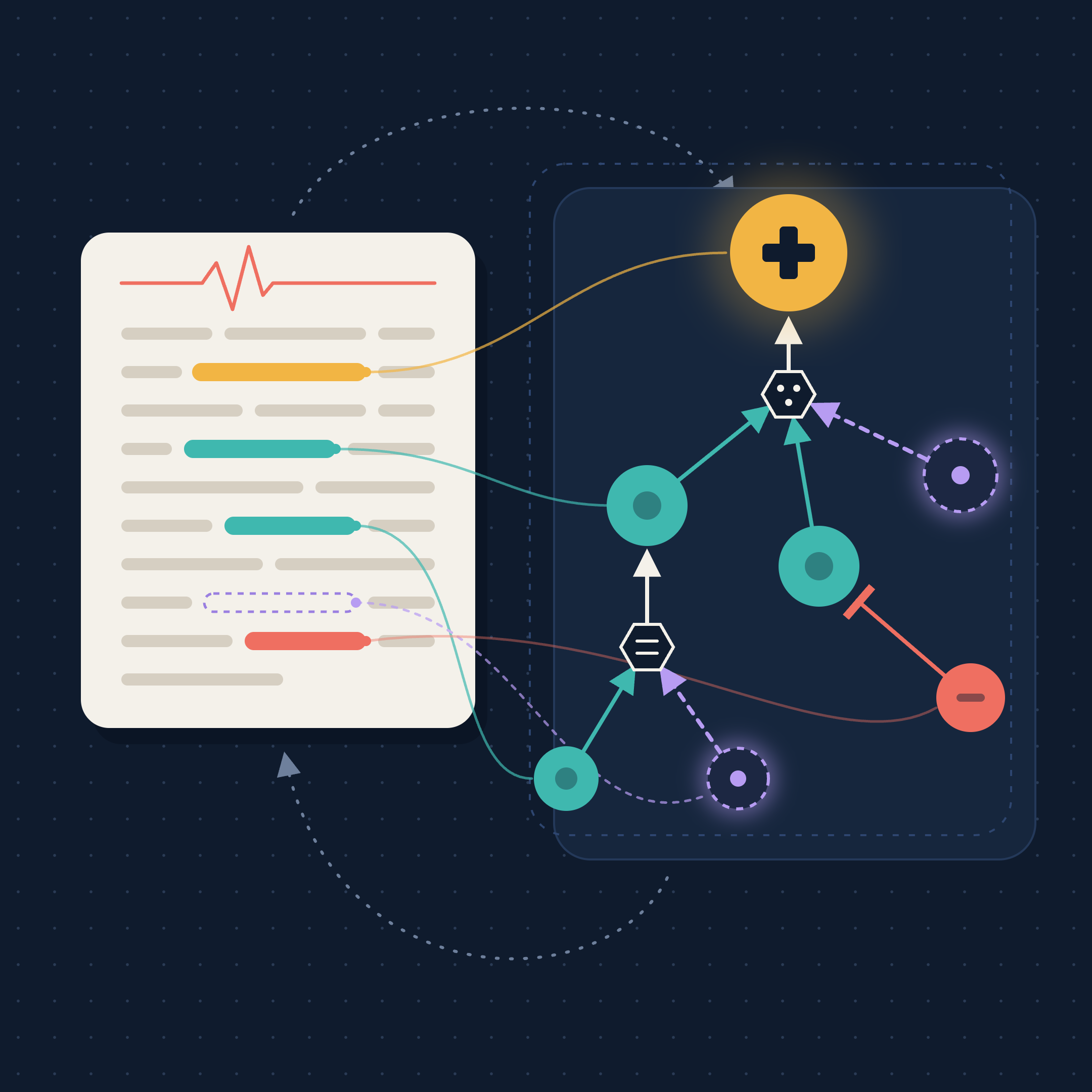
Goal: Develop and evaluate a pipeline that turns physicians’ free-text explanations of a diagnosis into a structured argument representation. The representation has two layers: claims and premises with support and attack relations, and on top of that the argumentation scheme of each inference with its unstated premises made explicit. Compare the pipeline with a baseline on an open, expert-annotated dataset, and test how much argumentative content survives a round trip from text to structure and back to text.
Research questions:
- RQ1 - Which argumentation schemes do physicians use when they justify a diagnosis, and how much of their reasoning remains implicit?
- RQ2 - How accurately can computational methods extract argument components, relations and schemes?
- RQ3 - Can implicit premises be reconstructed reliably, and does guidance by argumentation schemes or by medical domain knowledge improve the reconstruction?
- RQ4 - How much argumentative content is lost in a round trip of text → structure → text?
AI assistants increasingly reason together with people, for example when a physician and a diagnostic system weigh the evidence for a diagnosis. To engage with the physician’s reasoning, and not only present its own, such a system must understand the arguments people make. It must recognize which statements are claims and which are reasons, how they support or attack each other, and which reasoning patterns connect them. This task is known as argument mining [1].
Physicians’ explanations are hard to mine because much of the reasoning is never written down. A doctor writes “fever and hypotension, therefore septic shock” and leaves the general medical knowledge that links the two implicit. Argumentation schemes describe such recurring reasoning patterns and specify which premises they require. This makes it possible to identify missing premises and reconstruct them [2]. Large language models now perform well on many argument mining subtasks [3]. Whether they can recover the implicit structure of expert medical reasoning, however, is an open question.
This proposed thesis investigates this question on CasiMedicos-Arg, an open dataset of 558 clinical cases in which physicians explain why a diagnosis is correct or incorrect, annotated with argument components and relations [4]. You will extend part of the dataset with argumentation schemes and implicit premises, compare extraction methods with a fine-tuned baseline, and test whether the structure you extract preserves what the physician actually argued.
References
[1] Lawrence, J., & Reed, C. (2019). Argument Mining: A Survey. Computational Linguistics, 45(4), 765–818. https://doi.org/10.1162/coli_a_00364
[2] Walton, D., & Reed, C. (2005). Argumentation schemes and enthymemes. Synthese, 145(3), 339–370. https://doi.org/10.1007/s11229-005-6198-x
[3] Cabessa, J., Hernault, H., & Mushtaq, U. (2025). Argument Mining with Fine-Tuned Large Language Models. Proceedings of the 31st International Conference on Computational Linguistics, 6624–6635. https://aclanthology.org/2025.coling-main.442
[4] Sviridova, E., Yeginbergen, A., Estarrona, A., Cabrio, E., Villata, S., & Agerri, R. (2024). CasiMedicos-Arg: A Medical Question Answering Dataset Annotated with Explanatory Argumentative Structures. Proceedings of the 2024 Conference on Empirical Methods in Natural Language Processing. https://doi.org/10.18653/v1/2024.emnlp-main.1026